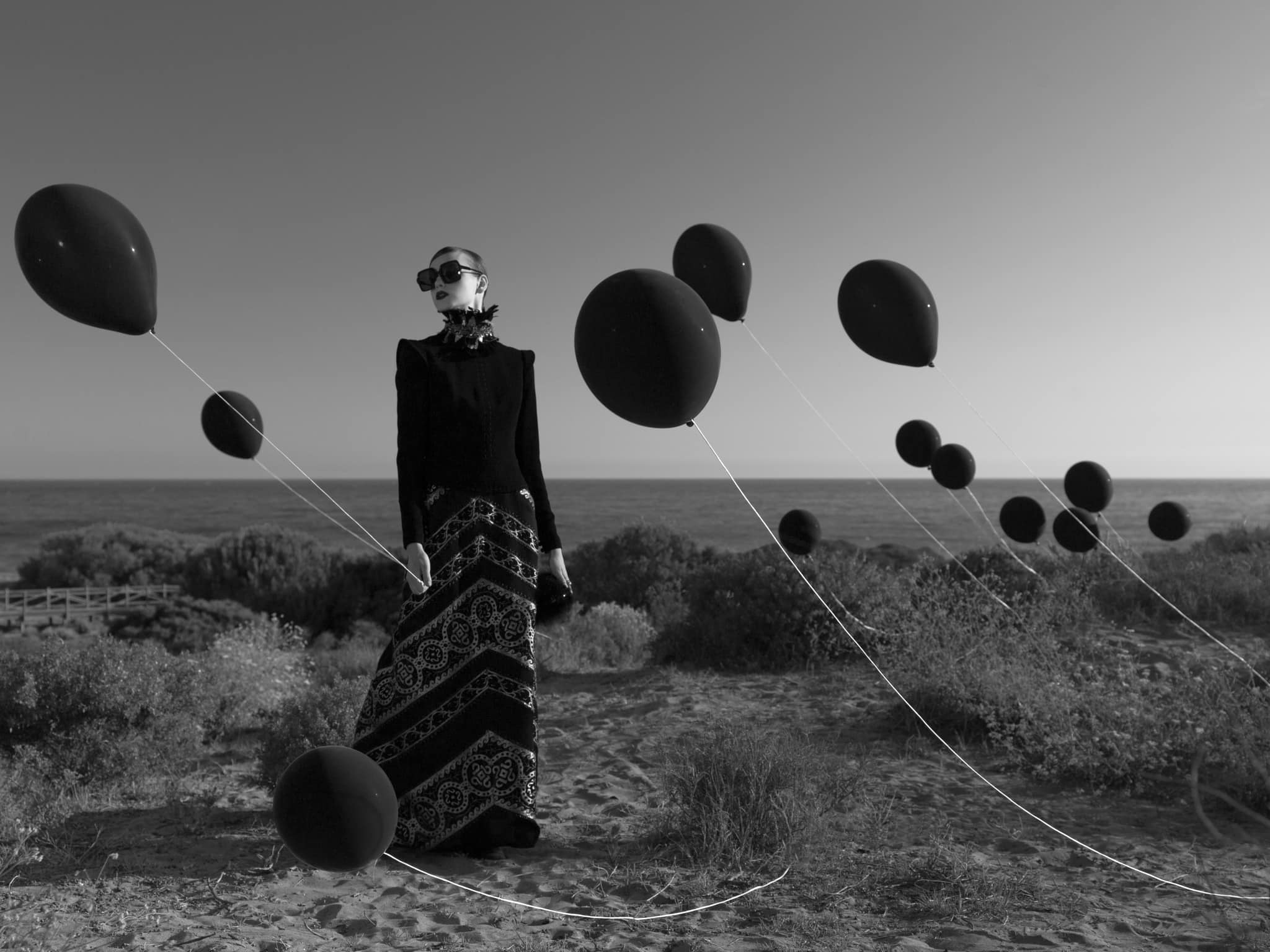
Saud Rifat is an award-winning Marbella-based executive producer, photographer, and cognitive systems researcher. His path began with a Polaroid at five years old. That early spark became a lifelong study of
light, rhythm, and story. In 2002, he launched his first audiovisual production company and learned the
craft
from the ground up. In 2007, he shifted his focus to fashion photography, a move that led to the
LUX Silver Award for Fashion and Beauty in 2011. In 2015 and 2016, he served on the jury for the Elite
Model Look España castings in Málaga, together with senior representatives from Elite Barcelona and other
fashion industry professionals.
Beyond the camera, Saud spent eighteen years with the Spanish Red Cross, including roughly
eight years in maritime rescue leadership in Marbella, an experience that strengthened his calm
decision-making, situational awareness, and coordination under pressure.
He founded Silver
Snow Studios in Marbella, Spain, in 2013. Today, he leads international photo and film productions
across Europe and the Middle East with a calm, precise style and a producer’s discipline.
His photography has appeared in Vogue Italia and Harper’s Bazaar Turkey, with brand work including
campaigns for GHD International and Pfizer. On the production side, he has overseen shoots for O2
Slovakia, AsiaCell Iraq, Yves Saint Laurent UK, Herbalife, FIFA Esports, Husqvarna, Warner Bros, Waterdrop,
Just-Eat, and Nike. His work has also included projects featuring renowned Arabic singer Kadim Al Sahir, an
international campaign with Novak Djokovic, and the Esports World Cup featuring five-time world chess
champion Magnus Carlsen.
His background behind the lens gives Saud a practical advantage as a producer. He understands the
language of directors, cinematographers, stylists, and lighting crews, anticipates needs before they
become problems, and keeps sets running smoothly while remaining deeply respectful of the craft.
In parallel, Saud develops independent research in cognitive systems. His current
research spans three preprints: Cognitive Singularity Theory, a measurement framework for detecting
recursive cognitive transitions in artificial systems; the Cognitive Autonomy Index, an operational
framework for detecting and measuring those transitions; and Recasting Lewin's Field Theory, which
extends Lewin's classic field formulation through time by incorporating emotional filtering and
higher-order meta-awareness. All three preprints are available on the Research page.